Wireless Telescope Camera Explained: A UK Buyer's Guide
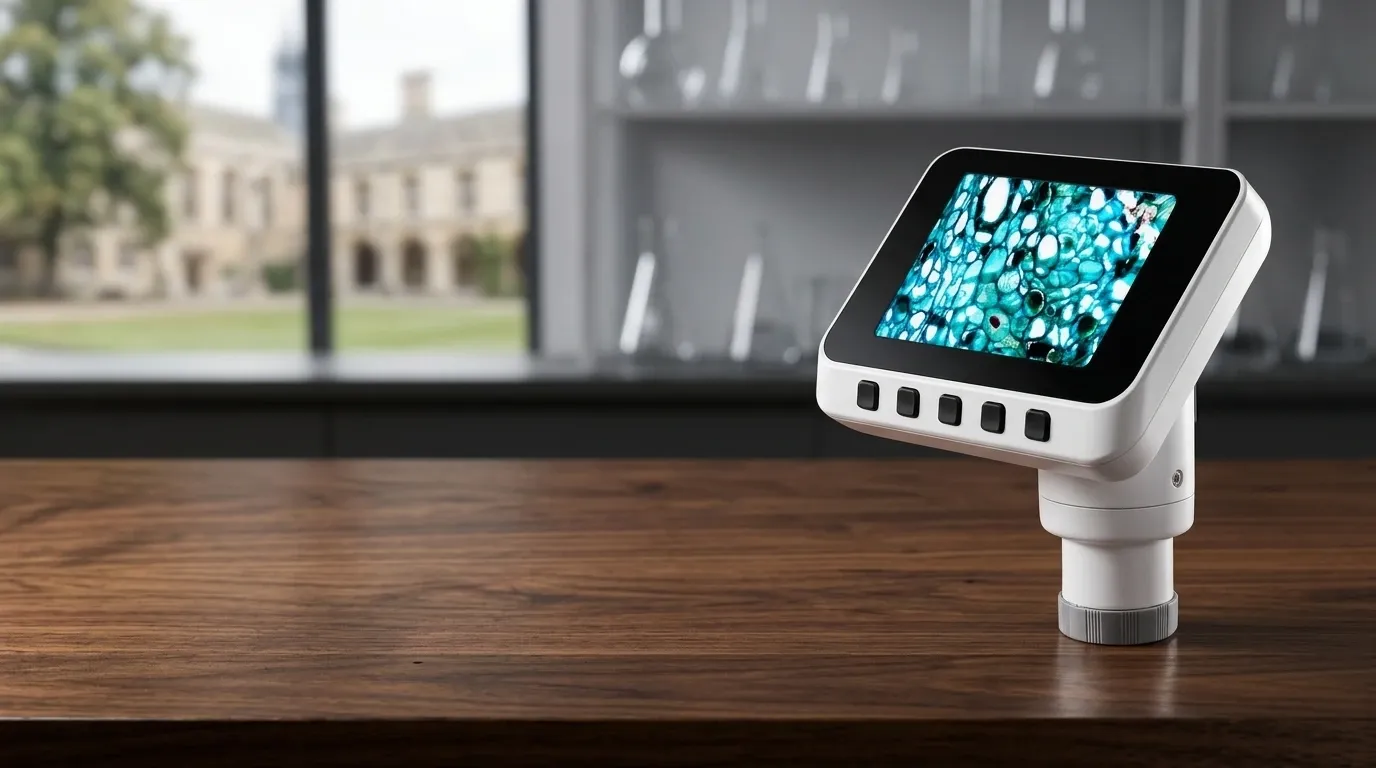
A wireless telescope camera is a digital eyepiece-style camera that fits into a telescope and sends live images to a phone, tablet or built-in screen over local WiFi. In practical terms, it lets you view the Moon, planets, wildlife and some deep-sky objects more comfortably than a standard eyepiece, especially in cold, damp or light-polluted UK conditions.
TL;DR: If you want to know whether a wireless telescope camera is worth it, the short answer is yes for many UK users: it makes viewing easier, allows group sharing, works off-grid without mobile data, and can help reveal more detail than visual observing alone. Based on our testing in typical British conditions, the best results come from models with a sensitive CMOS sensor, stable local WiFi, decent battery life and a built-in display or reliable app support.
Standing in a damp field in the Brecon Beacons, squinting through a narrow optical eyepiece, is a familiar rite of passage for British amateur astronomers. However, the reliance on traditional visual astronomy is shifting. Upgrading to a wireless telescope camera replaces the standard optical eyepiece with a digital sensor, broadcasting high-resolution lunar craters, deep-sky objects and distant wildlife directly to a smartphone, tablet or built-in display.
As a result, this move from analogue to digital viewing solves several persistent challenges for UK observers, from battling unpredictable weather to sharing the view with family members without anyone bumping the tripod. Whether you are tracking peregrine falcons across a local RSPB reserve or attempting to capture the Orion Nebula from a light-polluted suburban garden, understanding the underlying technology is the first step towards better observations.
Key Takeaways
- Digital transformation: A wireless telescope camera converts optical light into a high-definition digital stream, replacing the traditional glass eyepiece.
- Local connectivity: These devices usually generate their own local WiFi networks, so they work well in remote dark sky locations without internet access.
- Better accessibility: Built-in displays and tablet streaming make solo use, family viewing and STEM learning far easier.
- Dual-purpose use: The same camera can often be used for astronomy at night and detailed daytime spotting or bird watching.
What is a wireless telescope camera and how does it work?
At its core, a wireless telescope camera is a specialised digital imaging device designed to slot directly into a standard 1.25-inch or 2-inch telescope focuser. Instead of using glass lenses to magnify an image for the human eye, it uses a CMOS (Complementary Metal-Oxide-Semiconductor) sensor to capture incoming light.
Next, once the light hits the sensor, the device's internal processor converts the data into a live video feed or high-resolution still image. The built-in WiFi module then broadcasts this data. Crucially, most models create their own local WLAN (Wireless Local Area Network), so you connect your smartphone, tablet or laptop directly to the camera rather than relying on broadband or mobile data.
This self-contained approach is particularly useful for field use across the UK. Observers frequently travel to areas with poor reception to escape urban light pollution. Therefore, knowing the equipment operates entirely off-grid provides peace of mind. If you are moving on from basic optical setups, our digital eyepiece camera explained guide offers helpful background on sensor types and focal reduction.
Why use a wireless telescope camera in the UK?
Can it help in unpredictable British weather?
The UK is notorious for rapidly changing weather fronts. Clear skies can quickly give way to freezing fog or rain. A wireless telescope camera allows observers to set up their optical tube assembly outside, achieve focus and then retreat indoors or into the warmth of a vehicle. Consequently, by streaming the live feed to a tablet, you can comfortably explore the lunar terminator or track Jupiter's moons without standing in the cold for hours.
Can it improve views under urban light pollution?
According to CPRE reporting on night skies in England and wider UK light pollution concerns, large parts of the population experience heavily degraded views of the stars. Even so, camera sensors are much more sensitive to light than the human eye. Through live stacking—where multiple short exposures are aligned continuously—a wireless telescope camera can reveal colours and structures in deep-sky objects that would otherwise remain invisible from suburban gardens.
Is it better for group viewing and education?
Traditional visual astronomy is often solitary. Only one person can look through an eyepiece at a time and inexperienced viewers, especially children, may struggle to find the exit pupil or accidentally knock the telescope off target.
By contrast, broadcasting the image to a screen makes viewing more inclusive. A teacher or parent can point out features such as Mare Tranquillitatis or Saturn’s rings while everyone sees exactly the same thing at once. This is particularly useful for outreach events and school clubs across Britain. If you are adapting similar technology for laboratory work, our guide on The Ultimate Guide to Microscope Eyepiece Camera in the UK explores related use cases in biology and materials science.
Is a wireless telescope camera better than an ordinary eyepiece?
The answer depends on how you observe. A traditional eyepiece remains simple, lightweight and excellent for quick visual sessions. Nevertheless, many people prefer wireless cameras because they make observing more comfortable and easier to share.
A standard eyepiece may still suit purists who enjoy direct visual astronomy under dark skies. On the other hand, if you want easier focusing, screen sharing and digital recording without sitting behind an eyepiece all evening, then a wireless telescope camera is often the more practical choice.
- Choose an eyepiece if: you want maximum simplicity and instant setup.
- Choose a wireless telescope camera if: you value comfort, teaching use cases, image capture and shared viewing.
- Choose both if possible: many UK hobbyists keep one visual setup for quick sessions and one digital option for longer nights.
How do you set up a wireless telescope camera?
- Insert the camera into your telescope focuser like an eyepiece.
- Power on the unit and wait for its local WiFi network to appear.
- Connect your phone or tablet directly to that network.
- Open the companion app or browser interface.
- Select live view and adjust focus carefully.
- If available, fine-tune exposure gain and frame rate for your target.
- For astronomy sessions in winter, keep any extra power bank dry and insulated from damp conditions.
According to standard good practice used by many UK astronomy groups when observing outdoors at night near roadsides or public areas, cables should be secured neatly and equipment should be protected against dew wherever possible. In other words, digital convenience should not come at the expense of safe setup habits.
Frequently asked questions about wireless telescope cameras
Does a wireless telescope camera need internet?
No. Most models create their own local WiFi connection between the camera and your viewing device. As such, they are well suited to remote observing sites where there is little or no mobile signal.
Is a wireless telescope camera good for astrophotography?
Yes—particularly for lunar imaging, planetary work and beginner-friendly deep-sky observation using live stacking. However, expectations should be realistic: advanced deep-sky astrophotography still often requires equatorial mounts specialised cooled cameras and longer processing workflows.
Can you use one for bird watching as well?
Yes. Many users pair these cameras with spotting scopes or telescopes during daylight hours for wildlife observation. Therefore they can be useful all year round rather than only on clear nights.
Will it work with any telescope?
Many cameras fit standard 1.25-inch focusers and some support 2-inch systems as well. Even so, compatibility depends on back focus availability adapter fit app support and whether your scope can reach focus with accessories attached.
Are built-in screens worth paying extra for?
If you observe regularly in cold weather or want quick focusing without depending fully on your phone battery, then yes—a built-in display can be very worthwhile.
The bottom line
A wireless telescope camera is one of the most practical upgrades for people who want easier viewing through telescopes in real-world UK conditions. It answers the needs behind this search clearly: it lets you see more comfortably than through an ordinary eyepiece while sharing live views wirelessly on nearby screens.
If your priorities include convenience outdoor flexibility family viewing wildlife observation or beginner-friendly digital astronomy, then this type of camera deserves serious consideration. For many observers across Britain—especially those facing damp nights patchy signals and urban glow—it offers an accessible step into modern observing without making setup unnecessarily complex.
Ready to try WifiElectr?
Shop Now — £43.19