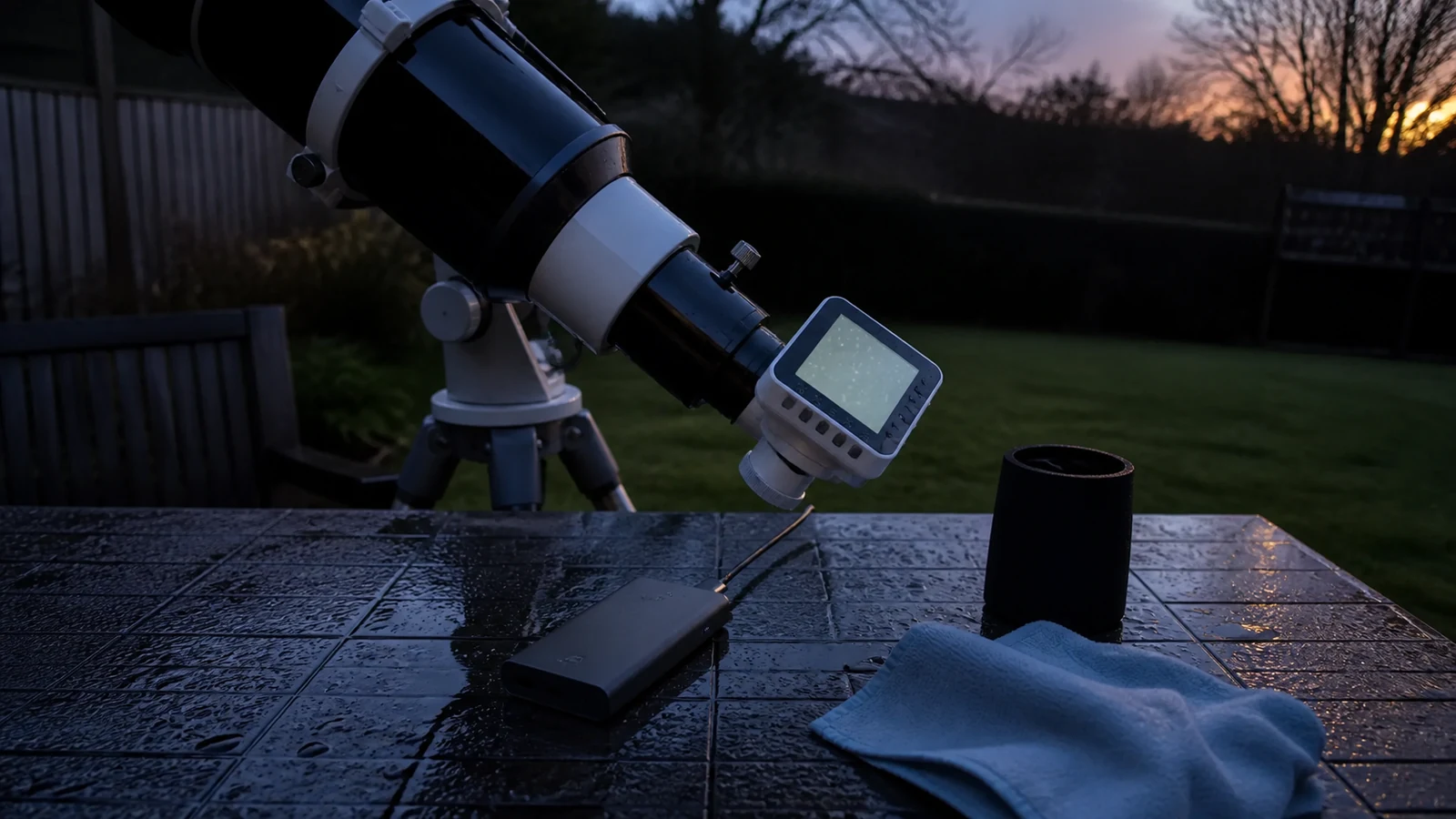
Digital Eyepiece Battery Dew Outdoor Observing UK
Direct answer: plan power and dew before the clear gap arrives; do not discover both after focus is finally sharp.
WIFIELECTR
Read more ->WifiElectr practical guides
Start with the person and instrument: first lunar images, a school laboratory, a child’s microscope project or simple no-laptop stargazing. Each guide separates verified workflow facts from product claims that still need a matching manual.
Direct answer: plan power and dew before the clear gap arrives; do not discover both after focus is finally sharp.
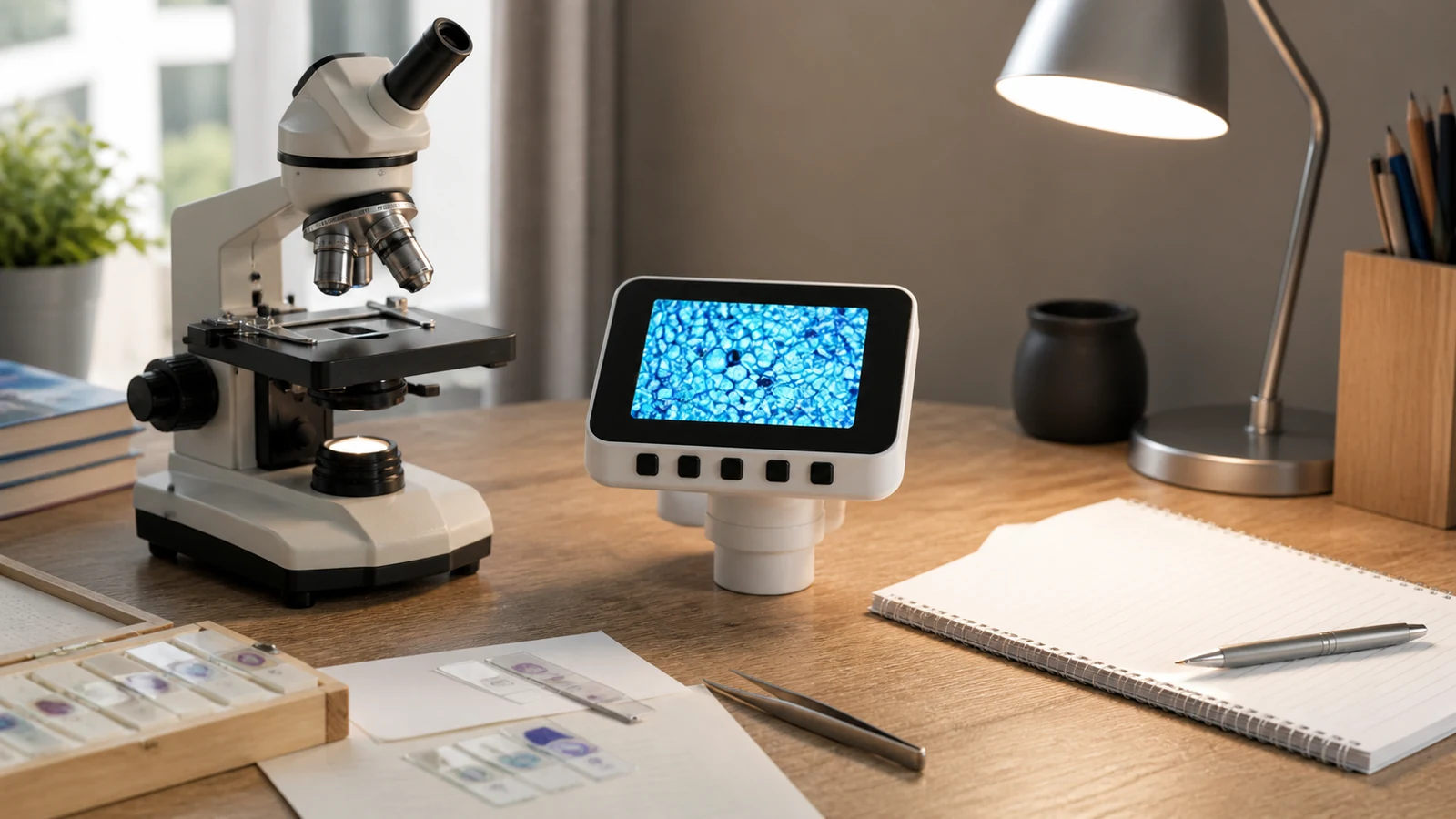
Direct answer: buy for one named school project outcome, not a vague 'kids science' bundle.
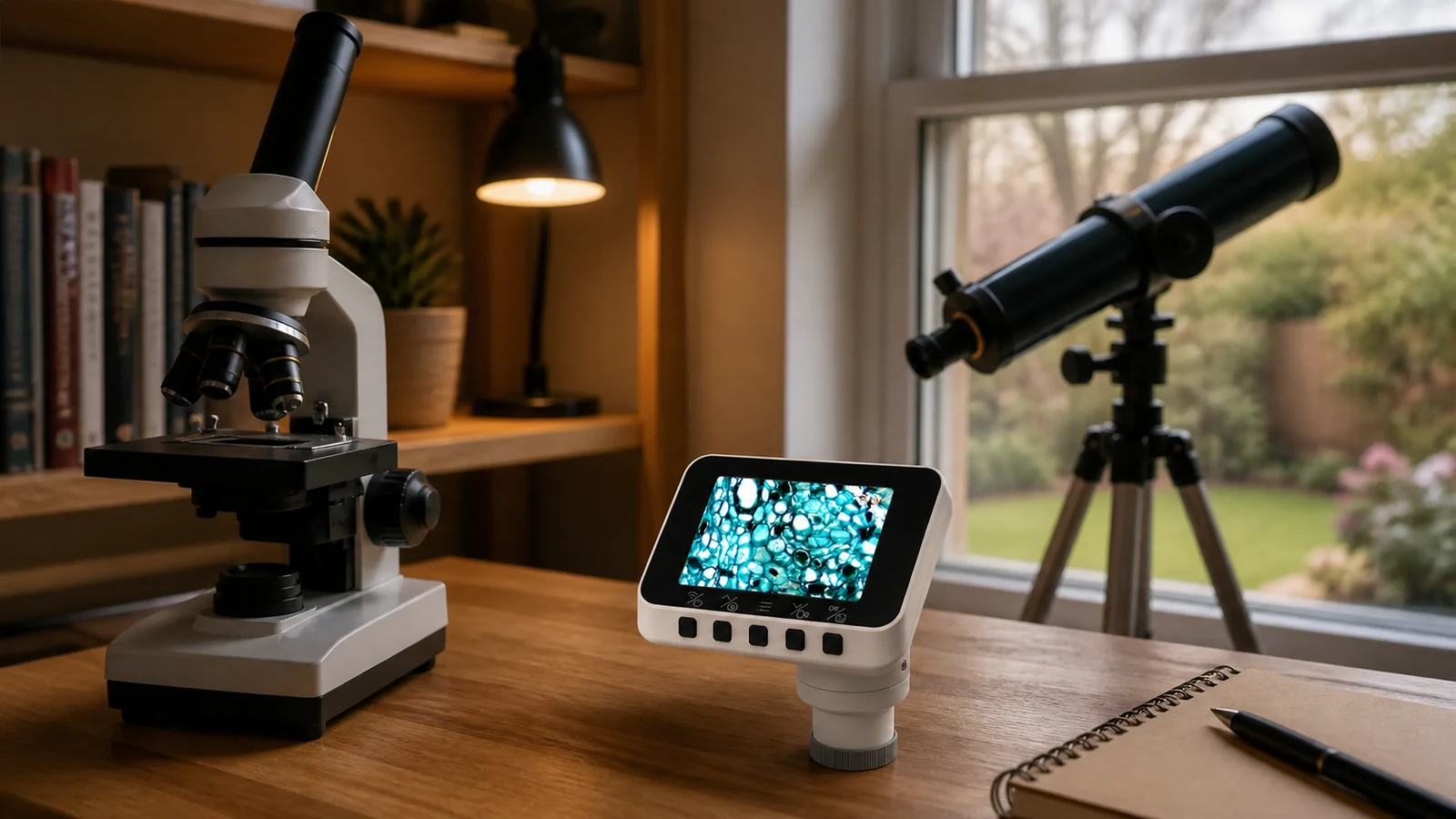
Direct answer: only buy dual-use if you can name one daytime microscope job and one night telescope job.
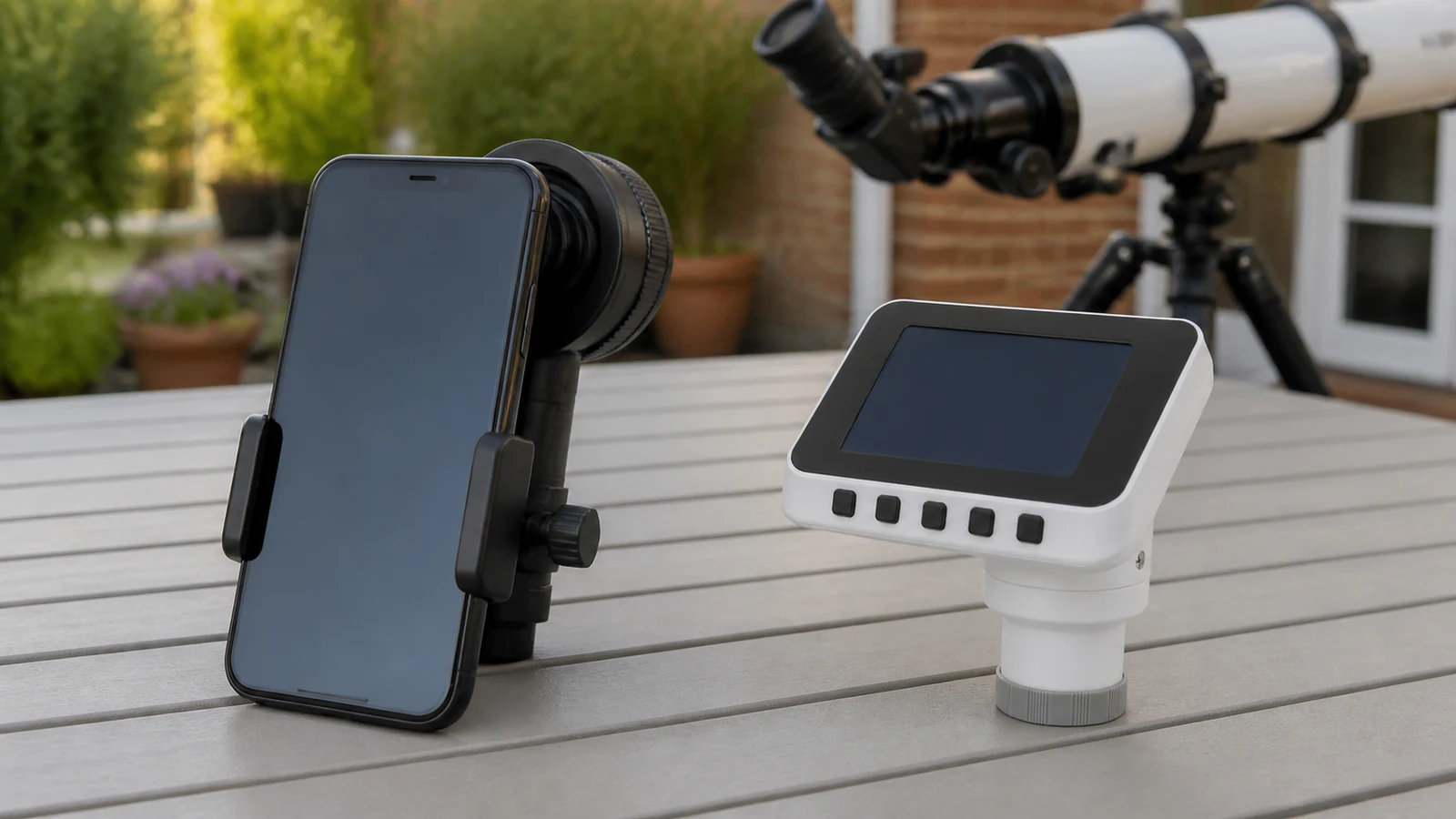
Direct answer: phone adapters keep your optical eyepiece and use afocal capture; electronic eyepieces replace the eyepiece for a dedicated screen path.
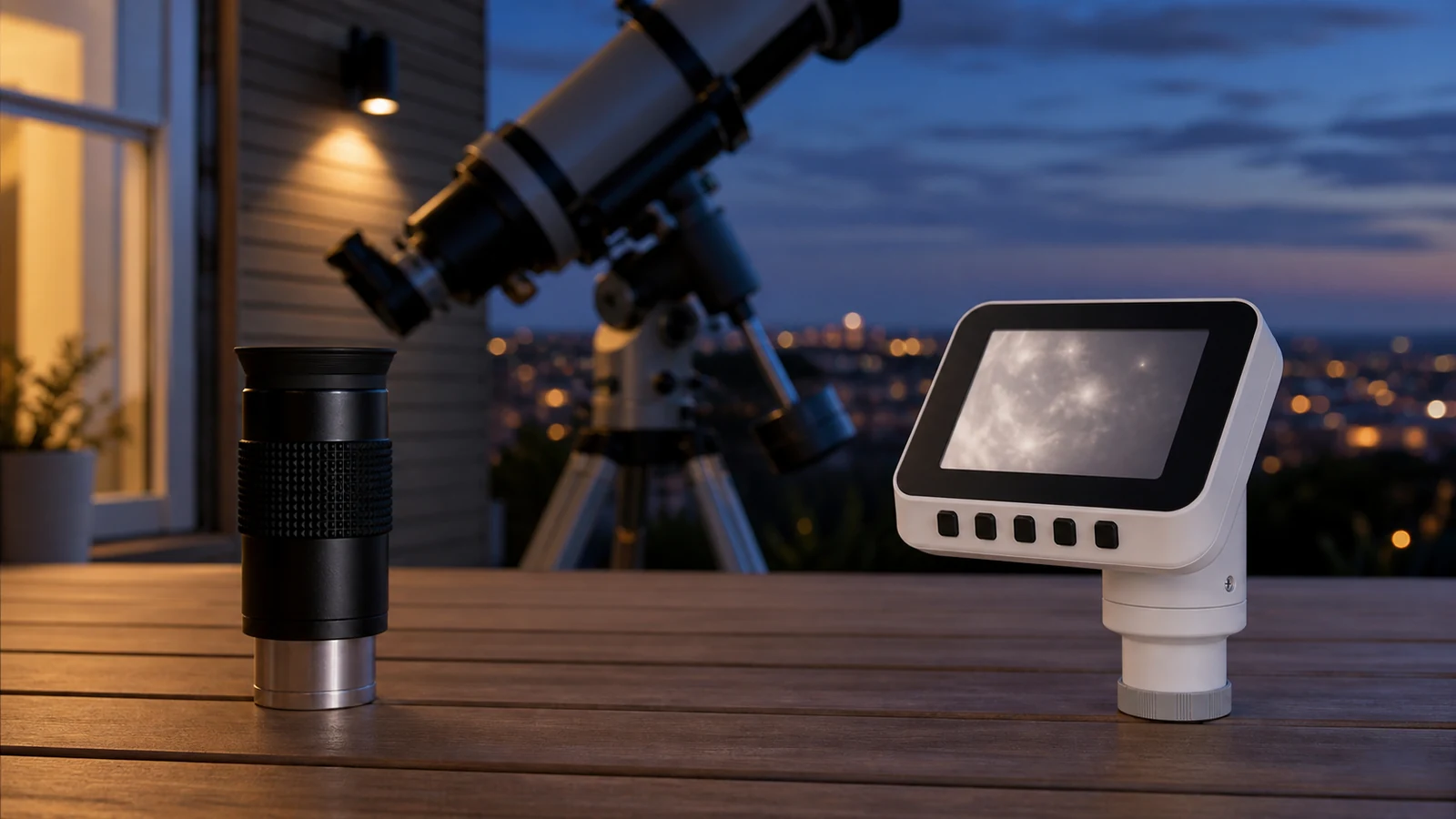
Direct answer: optical eyepieces win for immersive lunar/planetary viewing; electronic eyepieces win for shared screens and easy capture.
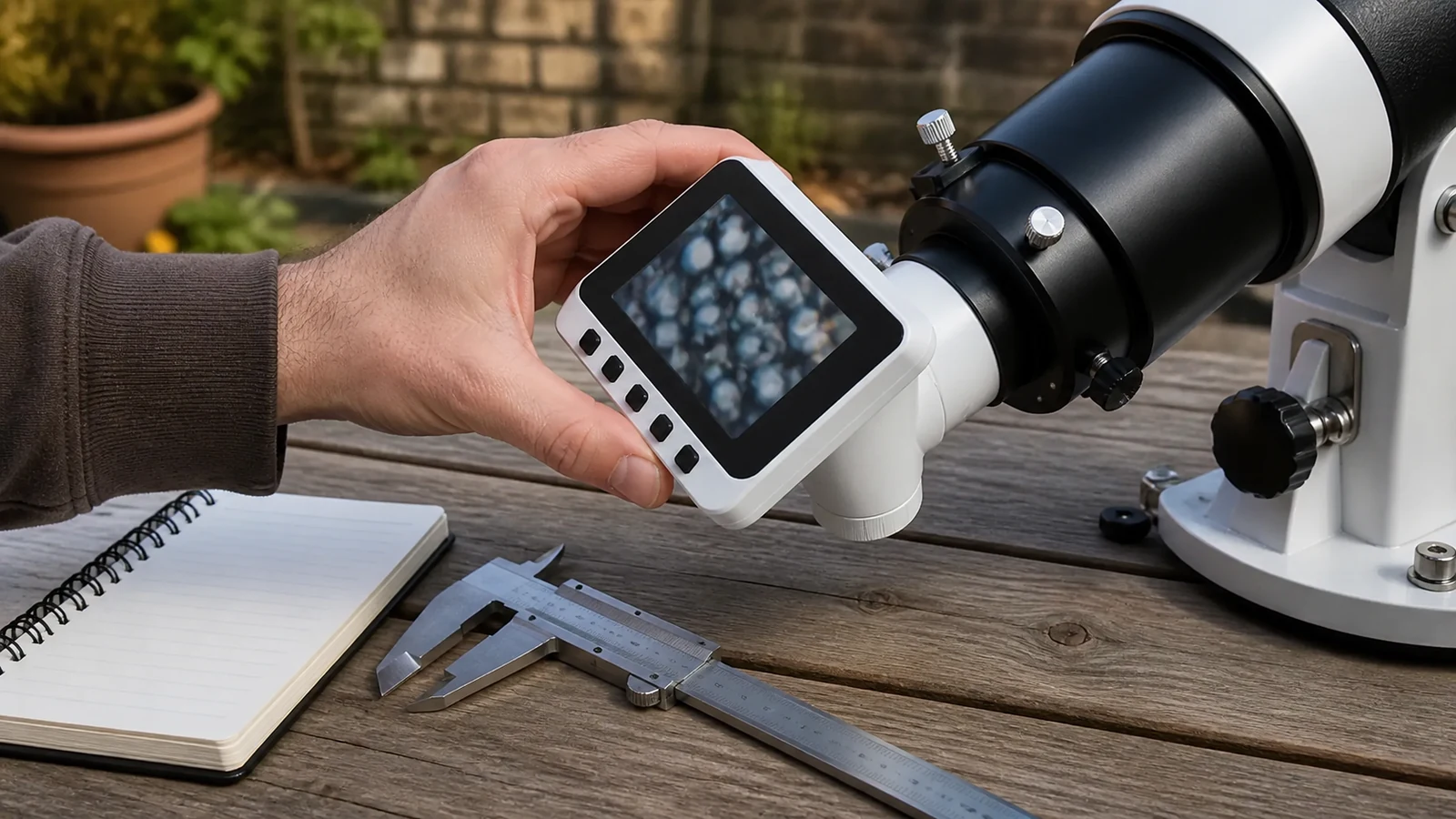
Direct answer: a digital eyepiece only works if barrel fit, focus travel and secure clamp are checked as one system.
An astrophotography eyepiece camera guide for UK beginners: check 1.25-inch fit, focus, bright-target workflow, stacking limits and solar safety.
Read the guide →Choose a digital eyepiece camera for a UK school lab: verify instrument fit, shared-view workflow, IT controls, image calibration and honest limits.
Read the guide →Choose a microscope camera with screen for kids UK families can use safely: check 23.2 mm fit, shared viewing, simple projects, calibration and limits.
Read the guide →A wireless telescope camera guide for UK stargazers who want simple screen viewing: verify 1.25-inch fit, WiFi workflow, focus, power and target limits.
Read the guide →